Workforce segmentation analytics: a different approach to people planning
Effective workforce management cannot be overstated in the face of mounting challenges within the healthcare sector. Recognising this critical need, Strasys, in collaboration with NHS partners, launched “Thinking Differently,” a webinar series aimed at reimagining healthcare while first focusing on workforce strategies. The objective is to share transformative ideas, where experts converge to share insights and pioneering approaches in reimagining healthcare.

Dame Jo Williams
Chair, Alder Hey Children’s NHS Foundation Trust
A new paradigm in workforce strategy
The inaugural webinar, led by Dame Jo Williams of Alder Hey Children’s NHS Foundation Trust, explored the opportunities for enabling the workforce to give their best. With the workforce being the most substantial expense for healthcare institutions, Dame Jo challenged the status quo, questioning the depth of our understanding of workforce needs, actions, and thoughts. The discussion shifted towards leveraging data in novel ways to transcend traditional operational metrics, aiming to foster a more nurturing and understanding workplace environment.

Naeem Younis
Founder and CEO, Strasys
Focus on the human stories in the workforce for a step change
Naeem Younis, Founder and CEO of Strasys, brought a personal narrative to the forefront, illustrating how the patient experience is profoundly shaped by the staff’s warmth and empathy rather than the clinical quality of care alone. This anecdote served as a potent reminder that healthcare, at its core, is a human-centric industry. Younis then addressed the diversity within the NHS workforce, advocating for a tailored approach to workforce management that respects and responds to the unique backgrounds and needs of each staff member. This thinking underpins the Workforce Decision Intelligence approach to population segmentation.
45%
of NHS budget is workforce expenditure
£20m
productivity opportunity per typical NHS Trust
200+
nationalities represented in the NHS workforce
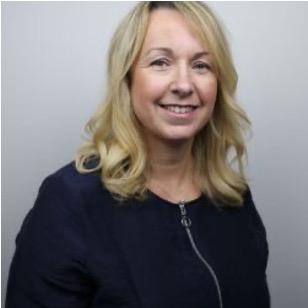
Melissa Swindell
Chief People Officer, Alder Hey Children’s NHS Foundation Trust
Delivering results through innovative workforce segmentation at Alder Hey
Melissa Swindell, with over two decades of HR experience at Alder Hey Children’s NHS Foundation Trust, shared her journey of developing a people strategy that aligns with the organisation’s vision. By re-evaluating traditional workforce metrics and integrating qualitative and quantitative data, Alder Hey has achieved notable improvements in staff satisfaction and retention. The workforce segmentation identified five distinct segments, each with different needs and motivations, enabling targeted interventions rather than one-size-fits-all programmes. This work contributed to Alder Hey and Strasys being recognised as finalists in the HPMA Excellence in People awards.

Heather Barnett
Chief People Officer, Liverpool University Hospitals NHS Foundation Trust
Liverpool University Hospitals’ strategic shift using innovative workforce analytics
Heather Barnett, Chief People Officer of Liverpool University Hospitals NHS Foundation Trust, discussed the imperative of adapting workforce strategies to meet the needs of a diverse community. With over 15,000 staff spread across multiple sites, UHLG faces workforce challenges at a scale that extends well beyond the trust boundary into the wider Cheshire and Merseyside ICB system. Barnett highlights the importance of removing barriers and fostering collaboration across departments to enhance productivity and service delivery. Through intelligent use of workforce data, the segmentation identified a £350m productivity opportunity over five years, now embedded in the trust’s transformation programme. This partnership was later recognised as a finalist in the HSJ Partnership Awards 2025.

Dr Nadeem Moghal
Chief Medical and Innovation Officer, Strasys
A learning organisation and Decision Intelligence: the key to resilience
Dr Nadeem Moghal critiqued traditional staff development programmes, advocating for a learning organisation approach. By focusing on understanding and addressing the unique needs and inequalities within the workforce, organisations can improve productivity, reduce staff turnover, and enhance team dynamics. The connection is direct: when staff feel understood and supported, clinical quality and patient safety improve alongside productivity. Moghal’s insights underscored the importance of integrating all forms of data to inform decision-making and create a more resilient and effective workforce. This connects directly to the Decision Intelligence approach that Strasys brings to every engagement.
A unified call to action
The webinar concludes with a call to action from the speakers, urging healthcare leaders to prioritise workforce investment, engage directly with staff, foster executive collaboration, and embrace innovative thinking in people planning. These recommendations reflect a consensus on the need for a comprehensive and nuanced approach to workforce management that places the individual at the centre of planning efforts.
Prioritise workforce investment. Engage directly with staff. Foster executive collaboration. Embrace innovative thinking in people planning. And start by understanding the human stories your current data already contains but nobody is reading.
If your board is still planning the workforce by headcount and pay band, a short conversation can clarify what a segmentation-led approach could significantly improve planning, productivity and quality of care. No pitch. Just a practical starting point.
Questions leaders ask about workforce planning
-
Workforce segmentation uses qualitative and quantitative data to group staff by needs, behaviours, and motivations rather than by role or pay band. This enables targeted interventions that improve retention, productivity, and wellbeing. Strasys Workforce Decision Intelligence pioneered this approach in the NHS.
-
Traditional NHS workforce planning is activity-driven, linear, and unconnected. It reduces staff to headcount, roles, and operational targets. It fails to capture why people leave, what motivates them, or how team dynamics affect productivity. This creates a £20m productivity opportunity gap for a typical NHS Provider Trust.
-
Workforce Decision Intelligence (WDI) is Strasys’s analytics capability that combines workforce segmentation, AI, and domain expertise to transform people planning. It connects staff data, finance, performance, quality, and patient outcomes to reveal the human stories behind the numbers and enable precise interventions.
-
At Alder Hey Children’s NHS Foundation Trust, workforce segmentation led to notable improvements in staff satisfaction and retention. At Liverpool University Hospitals NHS Foundation Trust, it identified a £350m opportunity over five years and transformed strategic workforce planning from siloed headcount management to connected, data-driven people planning.