A Strasys DI Platform Solution

When a clinical service is in difficulty, every stakeholder sees a different cause. CSR brings the board to one version of the truth.

A clinician-led Strasys team triangulates five evidence streams (finance, workforce, performance, activity, and quality) with the human stories from boardroom to bedside. The review takes around three months. The output is a board-ready roadmap, grounded in evidence rather than in any single stakeholder's view.

Clinical Service Review is the applied layer of our Decision Intelligence Platform, used where a specific service needs to move.

Clinician-led

Reviews are led by Dr Nadeem Moghal, Chief Medical and Innovation Officer.

Three months

Typical engagement shape. Longer for system-wide or multi-site reviews.

Independent

Multidisciplinary team, free of the biases of any single clinical specialty.

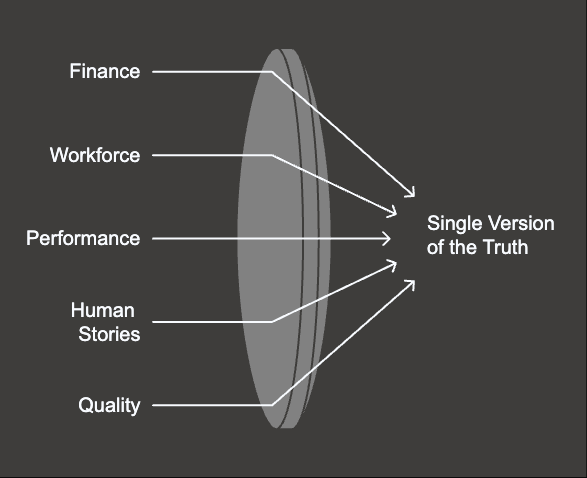
Strasys Clinical Service Review method: five evidence streams (finance, workforce, performance, activity, quality) triangulated with human stories, converging on a single version of the truth
What You Get

Four artefacts the board can act on.

Every CSR produces these four tangible outputs, shaped for the board meeting that follows the review, not for further analysis.

One version of the truth

Five data streams (finance, workforce, performance, activity, and quality) triangulated with the human stories from stakeholder interviews. Every finding corroborated across at least two inputs before it enters the recommendation set, converging on one version of the truth.

Root-cause analysis

A root-cause view sits beneath the symptoms a service in difficulty presents. CSR maps the underlying drivers across culture, capacity, pathway, and governance, informed by stakeholder interviews from boardroom to bedside.

Prioritised recommendations

A set of recommendations specific to the service in front of you, sequenced and sized for implementation by the people already in post. The roadmap is shaped to the context, never to a generic playbook.

Stakeholder commitment

Because every stakeholder has been heard through the review itself, the roadmap arrives with the people needed to deliver it already engaged. The review becomes the first step of the implementation.

The CSR Method

A three-month review, built on five evidence streams and the human stories that sit alongside them.

Objective and independent

Strasys reviews are designed to be free of the professional biases that sit inside royal college and peer reviews. The team brings no specialty agenda and no preferred solution, so the evidence leads.

Clinician-led multidisciplinary team

Reviews are clinically led by Dr Nadeem Moghal, Chief Medical and Innovation Officer. The team assembles data scientists, clinicians, anthropologists, and operational experts sized to the specialty and the context in front of them.

Triangulated Review

Five independent evidence streams (finance, workforce, performance, activity, quality) are cross-referenced against the human stories from stakeholder interviews, boardroom to bedside. A finding only enters the recommendation set once it is corroborated across at least two inputs. One version of the truth is the singular convergence point.

Human stories behind the numbers

Data explains what is happening. Stakeholder interviews explain why. The review treats these as one integrated evidence base, because a roadmap built on numbers alone never survives contact with the people asked to deliver it.

The Engagement Shape

A typical CSR runs over three months. The shape below is indicative. Longer engagements apply for system-wide or multi-site reviews.

Month 1 · Discover

~4 weeks

Data pull and first interviews

Finance, workforce, performance, activity, and quality data assembled. Boardroom and executive interviews begin. Scope and hypotheses set with the service.

Month 2 · Triangulate

~4 weeks

Evidence streams cross-referenced

Data analysis deepens. Clinical and frontline interviews complete the stakeholder arc. Findings tested back with the service before they enter the report.

Month 3 · Decide

~4 weeks

Recommendations and board-ready roadmap

Prioritised recommendations sequenced and sized. Delivered to the board as the first step of implementation, not a standalone report.

Coming Soon

SIA for Service Review. Interrogate the review evidence base.

SIA (Strasys Intelligence Agent) is coming to Clinical Service Review. Ask questions like "Which cost drivers in our cardiology pathway are most out of line with comparable trusts?" and get AI-generated answers grounded in the triangulated evidence base from your review. The same conversational AI that powers MIA in the Strasys Maternity Index, where it is already live.

Ask questions in natural language

Cross-reference findings across streams

Test recommendations against peer data

Keep the review live after handover

Already live as MIA in the Strasys Maternity Index
CEO Voice
"As a Trust CEO, many things keep you awake, but nothing more than a clinical service in difficulty. We needed a rounded analysis that took in all the data over several years, from workforce, finance, quality, and performance, underpinned by the human stories. We needed one version of the truth. We commissioned Strasys to apply their unique analytic, triangulating, objective approach to get us to that one version of the truth."
Maggie Oldham

Maggie Oldham

Chief Executive, Blackpool Teaching Hospitals NHS Foundation Trust

Clinical Voice

We bring clinical and operational experience to every review.

Dr Nadeem Moghal, Chief Medical and Innovation Officer, leads the clinical direction of every Strasys CSR. His clinical experience sits alongside the operational rigour of the team, drawn from executive, financial, and transformation roles. That combination is what carries the findings from analysis into the board conversation.

Dr Nadeem Moghal

Chief Medical and Innovation Officer, Strasys

Built for the leaders carrying a service in difficulty.

Medical Directors

Carry clinical accountability for a service where the stakeholder narratives diverge. Need an independent evidence base before committing to a direction of travel.

Divisional Directors

Responsible for a division under pressure, with competing demands from service leads, clinicians, and the board. Need a shared version of the truth to move forward.

Chief Executives

A service in difficulty sits at the top of the CEO's agenda. Need a review that arrives as the first step of change, not a report that delays it.

NEDs and Board Chairs

Require independent scrutiny of service performance. Need a triangulated view they can test against the executive's account and commit assurance around.

Mother and newborn baby in an NHS maternity ward
Specialist Variant

A CSR designed for maternity services.

Over two-thirds of NHS maternity services are rated inadequate or requires improvement by CQC. Trusts are spending heavily to shore up their units while birth rates shift and co-morbidities increase. The situation calls for a review designed for the specifics of maternity, not a general-purpose one.

The Strasys Maternity Service Review applies the CSR method with a system dynamic layer, safety evaluation aligned to Ockenden recommendations and CNST requirements, and a framing that works for the CQC Well-Led domain. Paired with the Strasys Maternity Index for ongoing benchmarking once the review is complete.

Ockenden Aligned CNST Ready CQC Well-Led
See the Strasys Maternity Index
In Context

Every service review approach answers one part of the question. CSR triangulates across them.

Review approach What it answers CSR also helps you answer Triangulated across five streams plus human stories?

Royal college or speciality body review

Is our clinical practice in line with specialty standards? Whether the specialty picture holds up once finance, workforce, and activity data are brought alongside it. No

Peer-trust clinical review

How do our clinical processes compare to a neighbour we respect? The root causes of the gap, and the sequence of recommendations that actually moves your service. No

GIRFT specialty reports

Where is national clinical variation concentrated in a given specialty? How that specialty-level variation shows up in the specific service on your watch, and what to do about it. Partial

CQC inspection

Is the service safe, effective, caring, responsive, and well-led against national criteria? The underlying reasons for where the service sits, and the internal roadmap to move it. No

Internal transformation team

What does a board-commissioned internal review of this service conclude? The independence that an internal review cannot deliver, and the multidisciplinary breadth beyond a single in-house team. Partial

Clinical Service Review

Strasys

Where is this service actually in difficulty, across clinical, financial, workforce, and cultural dimensions? All of the above, triangulated, with a three-month path to an implementable roadmap. Yes

CSR is the triangulation layer for service review. It integrates the clinical, financial, workforce, performance, and quality views that the other approaches illuminate one at a time, and it pairs them with the human stories that turn a report into an implementation.

How It Connects

The method the platform sends to a service that is in difficulty.

Consumer Needs Segmentation shows you the population your trust serves. Six Business Models shows you how care should be organised to serve them. CSR is what you call on when a specific service is in difficulty and the board needs a review that moves it.

Step 01

Consumer Needs Segmentation

Your patient population segmented by needs, behaviours, and acuity. The demand side of the evidence base.

Read more
Step 02

Six Business Models

The operating architecture that reconciles patient demand and workforce supply into a coherent model of care.

Read more
Step 03

Clinical Service Review

The method applied to a specific service in difficulty. Triangulated evidence and stakeholder engagement, delivered as the first step of implementation.

The Strasys Decision Intelligence Platform

FAQ

Questions we are asked.

Royal college and peer reviews bring specialist clinical depth, but they are often specialty-bound and can carry the biases of the community reviewing itself. Strasys CSR is led by a multidisciplinary team of clinicians, data scientists, anthropologists, and operational experts. The review integrates five evidence streams (finance, workforce, performance, activity, and quality) with the human stories from boardroom to bedside. The output is one version of the truth, grounded in triangulated evidence rather than in any single professional perspective.

A typical CSR is a three-month engagement. The team conducts data analysis and stakeholder interviews in parallel, triangulates the findings, tests them back with the service and the board, and delivers a roadmap for implementation. Longer engagements apply for system-wide or multi-site reviews.

A Strasys CSR is clinically led. Dr Nadeem Moghal, Chief Medical and Innovation Officer, oversees the clinical integrity of every review. The team then assembles the right mix of data scientists, clinicians, operational experts, and anthropologists for the specialty and context in question. Where deeper specialty expertise is needed, external clinical leaders are brought in under Strasys governance.

Yes. Maternity is a specialist variant of the Strasys CSR. The maternity review integrates system dynamic analysis with safety evaluation aligned to Ockenden recommendations, CNST requirements, and CQC Well-Led standards. The Strasys Maternity Index is available as the ongoing benchmarking layer once the review is complete.

Most of the data sits within your existing systems. We work with finance returns, ESR and rostering for workforce, performance returns including RTT, activity data from HES and local sources, and clinical quality returns including SHMI, incident data, and patient experience. Patient-level data stays within your governance arrangements. The value comes from connecting these sources, not from bringing in new ones.

A Strasys CSR produces one version of the truth the board can act on. That means a set of triangulated findings, a root-cause view that explains why the service is where it is, and a prioritised set of recommendations structured for implementation. The deliverables are shaped for board decision, not for further analysis.

SIA (Strasys Intelligence Agent) for Service Review is an upcoming AI agent that will let clinical leaders interrogate review data conversationally. Questions like "Which cost drivers in our cardiology pathway are most out of line with comparable trusts?" will return AI-generated answers grounded in the triangulated evidence base. SIA is already live as MIA in the Strasys Maternity Index.

Is there a service you need to move?

A briefing walks through the service you are carrying, the shape of a CSR that would fit, and what one version of the truth would look like for your board.

Book a briefing